
AI Security
Anthropic’s Claude Code and the Security Implications of Autonomous AI Agents
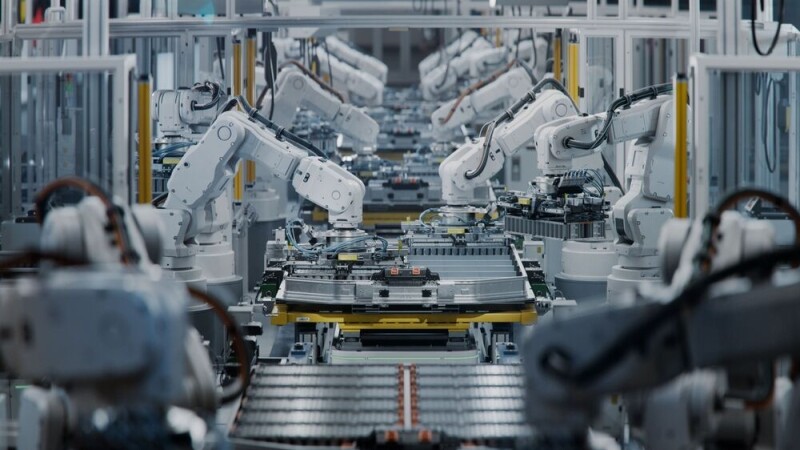
Anthropic introduces 'auto mode' for Claude Code, allowing AI to perform complex coding tasks autonomously, raising new security and reliability concerns.
The landscape of software development is undergoing a seismic shift with the introduction of autonomous AI agents. Anthropic has recently released 'auto mode' for Claude Code, a feature that allows the AI to operate with a high degree of independence. Unlike standard AI assistants that require step-by-step prompts, the auto mode can navigate complex coding tasks, make structural changes, and execute commands without constant human intervention. While this promises an era of unprecedented developer productivity, it simultaneously introduces substantial risks regarding code integrity, system stability, and security vulnerabilities that could be introduced at scale.
Evaluating the Risks of Autonomous Code Generation
The primary concern with autonomous AI in the Software Development Life Cycle (SDLC) is the potential for 'silent failures' or destructive actions. If an AI agent misinterprets a requirement or fails to account for a specific security protocol, it could inadvertently introduce vulnerabilities like SQL injection or insecure API endpoints into the production codebase. Furthermore, the reliance on automated classifiers to detect harmful or irreversible actions is not a silver bullet. These classifiers can be bypassed by sophisticated logic or novel attack vectors that they have not been trained to recognize. The concept of 'walking away' while an AI writes and commits code represents a significant departure from traditional security reviews and could lead to large-scale technical debt or catastrophic system failures if not managed correctly.
Best Practices for AI-Assisted Development
To safely leverage autonomous AI agents like Claude Code, organizations should implement the following security measures: 1. Enforce Human-in-the-Loop (HITL) Controls: Even with 'auto mode,' significant code changes, especially those involving security-sensitive modules or infrastructure-as-code, must require explicit human approval before being merged. 2. Isolated Development Environments: All AI-driven coding should take place in highly restricted, sandboxed environments. This prevents an autonomous agent from accidentally deleting production data or accessing sensitive internal resources. 3. Automated Security Scanning: Integrate advanced Static Application Security Testing (SAST) and Dynamic Application Security Testing (DAST) tools into the CI/CD pipeline. These tools provide an objective layer of defense by scanning every line of AI-generated code for known vulnerabilities. 4. Version Control and Auditing: Maintain a detailed audit trail of all actions taken by AI agents. Having the ability to quickly revert a series of automated changes is essential for maintaining business continuity. 5. AI Literacy and Training: Developers must be trained not just to use AI, but to understand its limitations and the specific types of errors it is prone to making, ensuring they can conduct effective manual reviews of AI output.
แหล่งที่มา: The Register - Security เผยแพร่ครั้งแรก: Mon, 10 Aug 2026 12:38:00 +0200 บทความต้นฉบับ: อ่านต้นฉบับ
Source Attribution
แหล่งที่มา: The Register - Security
เผยแพร่ครั้งแรก: Mon, 10 Aug 2026 12:38:00 +0200
บทความต้นฉบับ: https://www.theregister.com/ai-and-ml/2026/08/10/claude-code-puts-auto-mode-in-the-drivers-seat/5285326
* Facebook / LinkedIn ไม่อนุญาตให้ใส่ข้อความให้ล่วงหน้า — กดปุ่มจะคัดลอกข้อความให้ก่อน เปิดหน้าแชร์แล้ววาง (paste) ได้เลย พรีวิวการ์ดจะแสดงอัตโนมัติเมื่อวางลิงก์